A few weeks with the OutSystems 11 MCP server

A few weeks with the OutSystems 11 MCP server

“Where does this value come from?”

Three actions and twelve tabs later, I’ve found it. Now I just need to remember why I was looking. 😉

Over the past few weeks, I’ve been using the OutSystems 11 MCP server to give my AI assistant access to the modules I have open in Service Studio. I use it throughout the day now, and I can’t imagine going back.

In my latest blog, I share how we tackled a complex import/export problem involving files with relationships between them. From investigating user stories to making changes, building realistic test sets and checking the results.

Superpowers helps structure the work. My own project skills keep our findings in a local Markdown knowledge base. AI also drafts the Jira notes and adds code comments for the next developer.

It’s helping me make complex changes faster, with more thorough testing and more confidence in what I deliver.

👉 Read the blog on Medium

How to Model Supertypes and Subtypes in OutSystemsWithout Creating a Monster Entity

How to Model Supertypes and Subtypes in OutSystemsWithout Creating a Monster Entity

How do you model supertypes and subtypes in OutSystems without creating a monster entity? 👾

I wrote a new blog post comparing three approaches, including validation, lifecycle management and the main trade-offs.

If opening your entity feels like scrolling through the end credits of a movie, it may be time to reconsider the model. 😉

👉 Read the blog: https://medium.com/@erwinvanrijsewijk/how-to-model-supertypes-and-subtypes-in-outsystems-without-creating-a-monster-entity-25ed87ef6f34?sharedUserId=erwinvanrijsewijk

OutSystems Champion

OutSystems Champion

Good morning! And what a great morning it is today!

Keeping a secret is hard. Keeping a secret for weeks with a brain like mine? That’s not just a challenge; that’s an Olympic sport. 😅

My mind has been running at 200% capacity trying not to blurp this out, but today I can finally release the pressure valve:
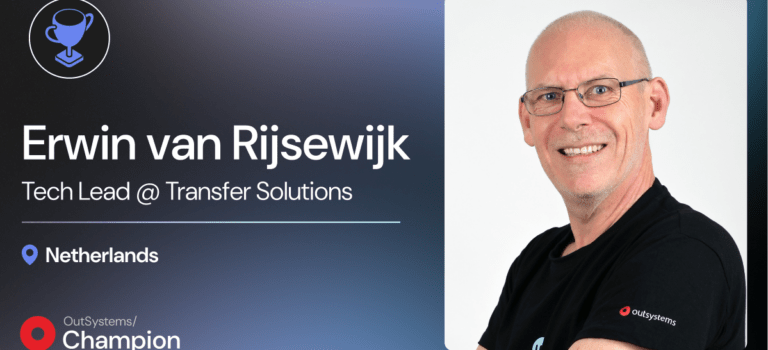
I am incredibly excited and honored to announce that I’ve been named an OutSystems Champion!

Low-code has been my favorite playground for 8 years now, because it moves as fast as my thoughts do. To be recognized by the OutSystems community for doing what I love is something I’m truly grateful for.

Huge thanks to everyone who supported me on this hyper-focused journey. Now, if you’ll excuse me, I have about 42 other open tabs to attend to, but this time, I’m doing it as a Champion.

https://www.linkedin.com/posts/erijsewijk_oschampions-lowcode-milestone-activity-7422156518369792001-J-sR?utm_source=share&utm_medium=member_desktop&rcm=ACoAAAAREY4BDtrrDS-i15-4nEOtIpIpIUuQ_0U

From Spaghetti Code to Low-Code: Refactoring My Internal Architecture

From Spaghetti Code to Low-Code: Refactoring My Internal Architecture

The Introduction: Critical Errors in Service Center

You’re a Senior Developer. You can map out a complex 4-Layer Architecture in your sleep. You’re the one they call when the production environment is showing “504 Gateway Timeouts” on a Friday afternoon, right when the client is trying to bulk-process ten thousand invoices.

And yet… my internal Service Studio keeps throwing Communication Exceptions on the most basic tasks. Entering working hours? Request Timeout. Finishing a grocery list? Aborted by User.

Does that sound familiar?

https://medium.com/@erwinvanrijsewijk/from-spaghetti-code-to-low-code-refactoring-my-internal-architecture-d0ef32a9032e

ODC Timers: The Killswitch “Gotcha” You Didn’t See Coming

ODC Timers: The Killswitch “Gotcha” You Didn’t See Coming

In O11, Site Properties stopped runaway timers instantly. In ODC, Settings are cached per transaction. This means toggling your killswitch while a timer is running does absolutely nothing. It’s basically the software equivalent of the “Close Door” button in an elevator—mostly there for emotional support. 😅

https://medium.com/@erwinvanrijsewijk/odc-timers-the-killswitch-gotcha-you-didnt-see-coming-f91e4b78d4e4

About Data Migrations in OutSystems ODC with Data Fabric and Parallel Workflows

About Data Migrations in OutSystems ODC with Data Fabric and Parallel Workflows

Data migration. Just saying the words makes some of us break out in a cold sweat! 😅

We’ve all been there: staring at a screen for hours, watching that progress bar crawl. So, when we kicked off our latest OutSystems ODC project, we knew we were in for the classic challenge—migrating data from an existing application that was about to be officially retired.

So, how did we tackle it?

We combined Data Fabric (in a way you might not expect) with Parallel Workflows to orchestrate the whole move. The best part? Running tasks in parallel is so much faster than waiting for one step to finish before starting the next!

If you’re curious about how we used workflows to speed up the process and (most importantly) validate the results, check out the full blog!

https://medium.com/@erwinvanrijsewijk/about-data-migrations-in-outsystems-odc-with-data-fabric-and-parallel-workflows-02e1f4f88ff1

Report ONE 25 — OutSystems & Agentic AI

Report ONE 25 — OutSystems & Agentic AI

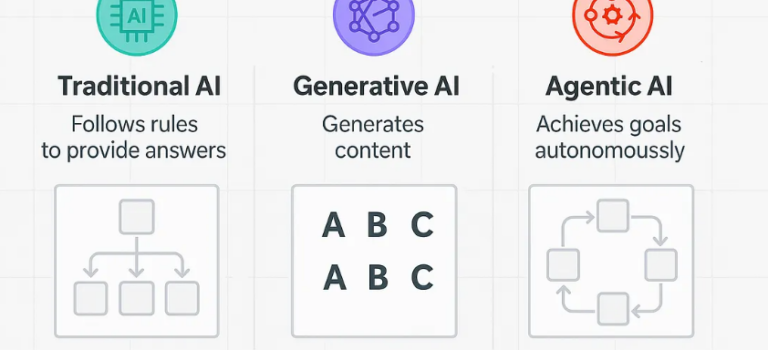
This week I attended the ONE25 conference by OutSystems, a two-day event packed with insights into the future direction of the platform. The most prominent theme was Agentic AI, highlighting how OutSystems is embracing intelligent automation and AI-driven development. Throughout the conference, I joined several technical sessions that dove deep into architecture, performance, and emerging capabilities, each offering valuable takeaways for consultants and developers. It was an inspiring experience that showcased how OutSystems continues to evolve and empower its community.

https://medium.com/@erwinvanrijsewijk/report-one-25-outsystems-agentic-ai-ddce8e6e8b56

It’s Friday Again! And Apparently, ‘Random’ in SQL Means ‘Same Number For Everyone’

It’s Friday Again! And Apparently, ‘Random’ in SQL Means ‘Same Number For Everyone’

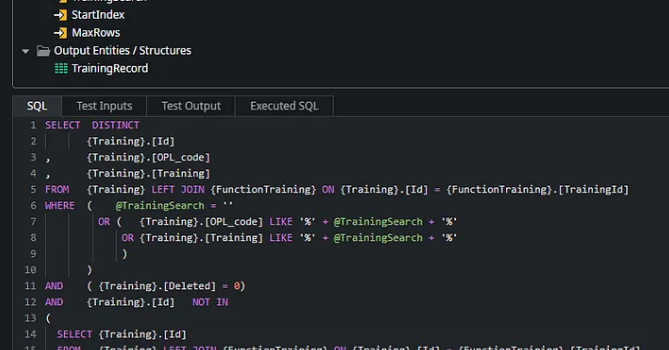
The other day I was working on an OutSystems project and needed 10 random names from a table containing 1000 names. How could I write an Advanced SQL statement that could do this as simply as possible? During my research, I came across an interesting difference in behavior between two methods of generating random numbers in SQL Server.”

Read more: https://medium.com/@erwinvanrijsewijk/its-friday-again-and-apparently-random-in-sql-means-same-number-for-everyone-2f0bd6476945